Service
Mobile App Development in South Africa
iOS and Android apps that ship — and connect to the systems behind them.
TailorMadeTech is a South African mobile app developer building production apps for iOS and Android. We ship apps to the App Store and Google Play, and we build them alongside the systems they connect to — so drivers, field staff, franchisees, and customers stay in sync with the office in real time.
What is mobile app development?
Mobile app development is the process of building software that runs natively on iOS and Android phones and is published to the App Store and Google Play. TailorMadeTech is a South African mobile app developer building production apps in Flutter — one codebase, both stores — designed alongside the web systems they connect to so drivers, field staff, franchisees, and customers stay in sync with the office in real time.
Why most mobile apps never ship — or never get used
Mobile is where most software projects fall apart. Web teams underestimate native platform rules, store-submission cycles, offline sync, and the simple discipline of building a screen a tired driver will tap correctly at 4am. Apps either never make it past TestFlight, or they ship and then sit unused because the workflow does not match real life on the depot floor or out in the field.
What we build under mobile app development
We build mobile apps that ship and stay in production:
Driver and field-staff apps
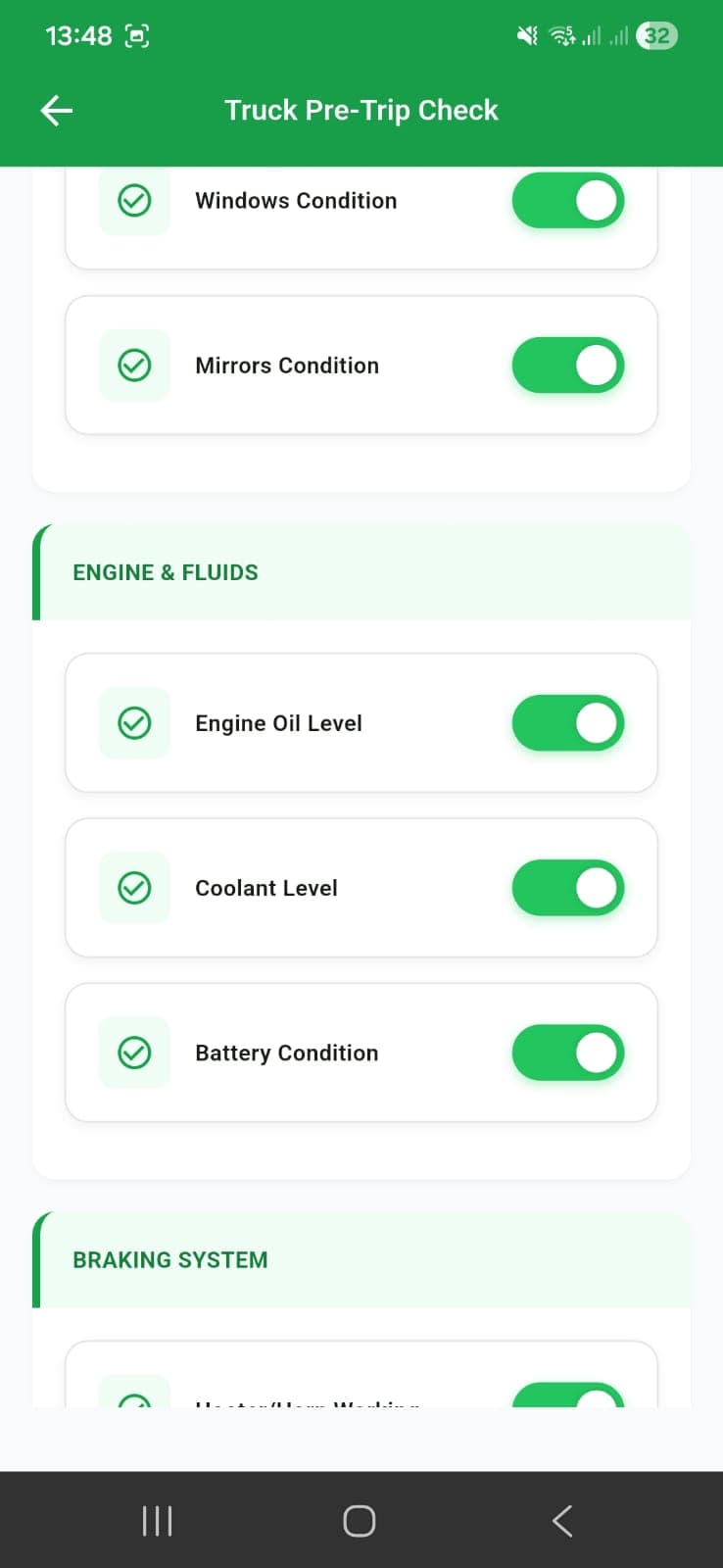
Pre-trip inspections, depot refuels, trip starts and ends, fault reports with photos — captured on the phone and synced into the office system when the device hits signal.
B2B operator apps
Companion apps for franchisees, managers, and back-office staff that pair with the web system they already use, with role-based access and tenant isolation.
Consumer apps
Privacy-first consumer apps with in-app subscriptions, push notifications, and AI-driven content. Stripe and RevenueCat dual-billing supported.
Offline-first architecture
Built for South African field realities — rural depots, weak signal, intermittent connectivity. Local cache via Hive, conflict-free sync the moment connectivity returns.
iOS and Android from one codebase
Flutter for cross-platform, with platform-specific tweaks where they matter. One codebase, two stores, web build available where it makes sense.
Push notifications and live updates
Firebase Cloud Messaging or app-specific channels, wired to the events that actually matter — not generic marketing pings.
Mobile apps currently in production
Real examples of mobile app development we have shipped to the App Store and Google Play:
Adaptix Mobile
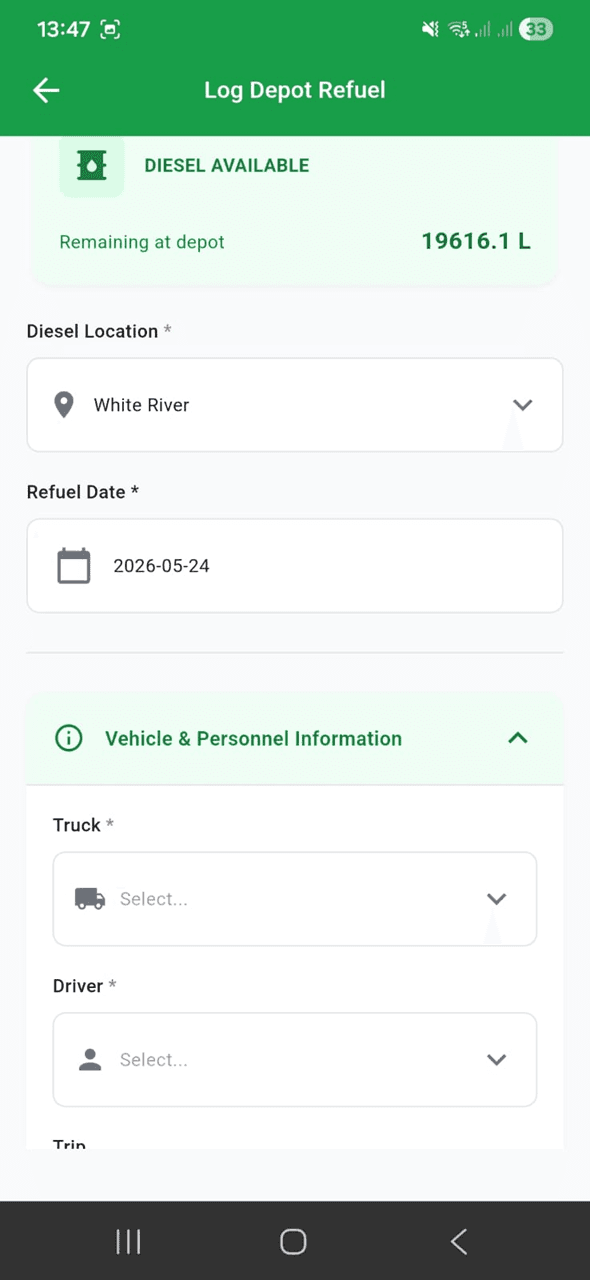
Offline-first companion app for the Adaptix fleet platform. Pre-trip checks, depot refuels, trip logs — built in Flutter, on the App Store and Google Play.
Whizplan
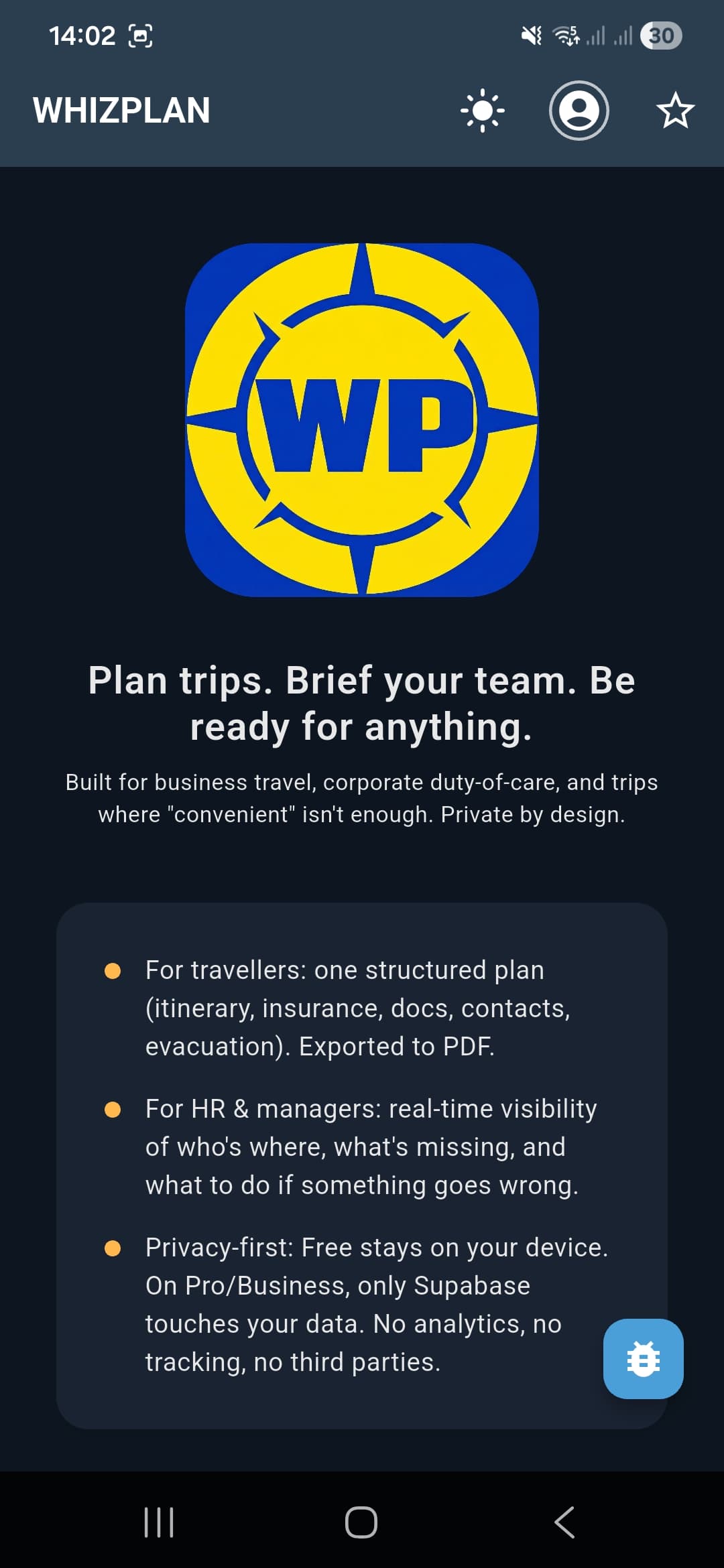
Privacy-first B2B travel-safety app with AI risk reports, multi-tier subscriptions (Stripe + RevenueCat), and Google Maps integration. Flutter for Android, iOS, and web.
Why a South African mobile app developer that ships
Most agencies will quote you a mobile app. Here is what is different about working with us:
Mobile is treated as a first-class build, not a bolt-on
We build the mobile app and the system it talks to together, so authentication, data shape, and offline sync are designed in from day one.
Live on the stores, not stuck in TestFlight
Apps in production today on both the App Store and Google Play. We handle store submission, review cycles, and platform-specific compliance.
Built for real-world field conditions
Offline-first is not an optional feature. We assume signal will drop and design every screen around recovering cleanly when it does.
POPIA-aware, privacy-first when you need it
For consumer products in regulated spaces, we have shipped apps where the architecture strips identifying metadata before it reaches third parties at all.
What we build mobile apps with
A modern cross-platform stack that ships to both stores from one codebase, with the office system designed in alongside the app so data and auth stay consistent end to end.
Flutter
iOS, Android, and web from one codebase
Our primary mobile framework. Native performance, full access to platform APIs, and a single codebase that ships to the App Store, Google Play, and (where useful) the web. Used in production on every mobile app we have shipped.
Hive + offline-first sync
Local persistence for field conditions
Local cache so drivers in rural depots with weak signal are never blocked. Conflict-free sync the moment connectivity returns — built into every Adaptix screen by default.
Supabase
Backend, auth, real-time data
The same managed Postgres + RLS + auth backend that powers our web platforms. Mobile apps talk to it via a secure API layer, so one source of truth serves both surfaces.
Integrations
Stripe, RevenueCat, Firebase, Google Maps
In-app subscriptions via Stripe or RevenueCat dual-billing, push notifications via Firebase Cloud Messaging, mapping via Google Maps. We wire whichever payment gateways, messaging channels, or platform APIs your app needs.
Next.js
Companion web dashboards
When the mobile app needs an office-side web surface (admin console, manager dashboard, reporting), we ship that in Next.js — sharing the Supabase backend so the data model and auth stay unified.
How a mobile app project runs
Same partnership model as our custom software builds — mobile is just one surface of the system:
Step 1: Discovery conversation
Free. We understand the workflow the app needs to support and whether mobile is genuinely the right surface for it.
Step 2: Scoping and architecture
A small scoping fee covers the data model, sync strategy, and platform-specific design work. You leave with a blueprint either way.
Step 3: Build, ship, and submit
We build in milestones, handle TestFlight and internal-testing tracks, and manage store submission to the App Store and Google Play.
Step 4: Partner and iterate
Ongoing monthly relationship for updates, OS-version compatibility, and feature work as your operation grows.
Frequently asked questions
Do you build native iOS and Android apps, or cross-platform?
We build with Flutter, which compiles to native iOS, native Android, and web from a single codebase. For 95% of business and consumer use cases this is the right call — same performance, half the build and maintenance cost of dual native teams. For platform-specific cases we drop into native code where needed.
Can you publish to the App Store and Google Play on our behalf?
Yes. We handle the full submission flow — provisioning, signing, store listings, screenshots, privacy declarations, review responses. We can publish under your developer accounts or our own depending on the relationship.
How does the mobile app talk to our existing system?
Through a secure API layer, typically Supabase or a custom edge layer. If you have an existing system we connect to it; if you do not, we build it alongside the mobile app so the data model is shared.
How much does mobile app development cost in South Africa?
Comparable to a custom web build of the same scope, because the mobile app and its backend are designed together. Specific numbers come out of the scoping phase. Long-term partnership pricing is significantly below typical mobile-agency rates.
Do you handle offline sync properly?
Yes. Offline-first is the default architecture for any app that operates in the field. We use Hive for local persistence and a tested sync strategy that handles conflicts, partial syncs, and reconnection cleanly.
How long until our app is live on the App Store and Google Play?
Most apps reach a first store-submitted milestone in 8 to 14 weeks. Store review adds 1 to 7 days for Apple and typically same-day for Google.
Ready to talk about your build?
Tell us about your operation and we will follow up to schedule a discovery call.
Book a Discovery CallOther services
View all servicesCustom software development
The systems your mobile app talks to — bespoke web platforms, dashboards, and integrations.
Learn moreFleet management software
Multi-tenant fleet platform with a built-in mobile app for drivers and depots.
Learn moreBusiness systems
Operations and reconciliation systems that often live half on web, half on mobile.
Learn more